Why We Believe in Community-Driven Food Solutions at TheOtherWife

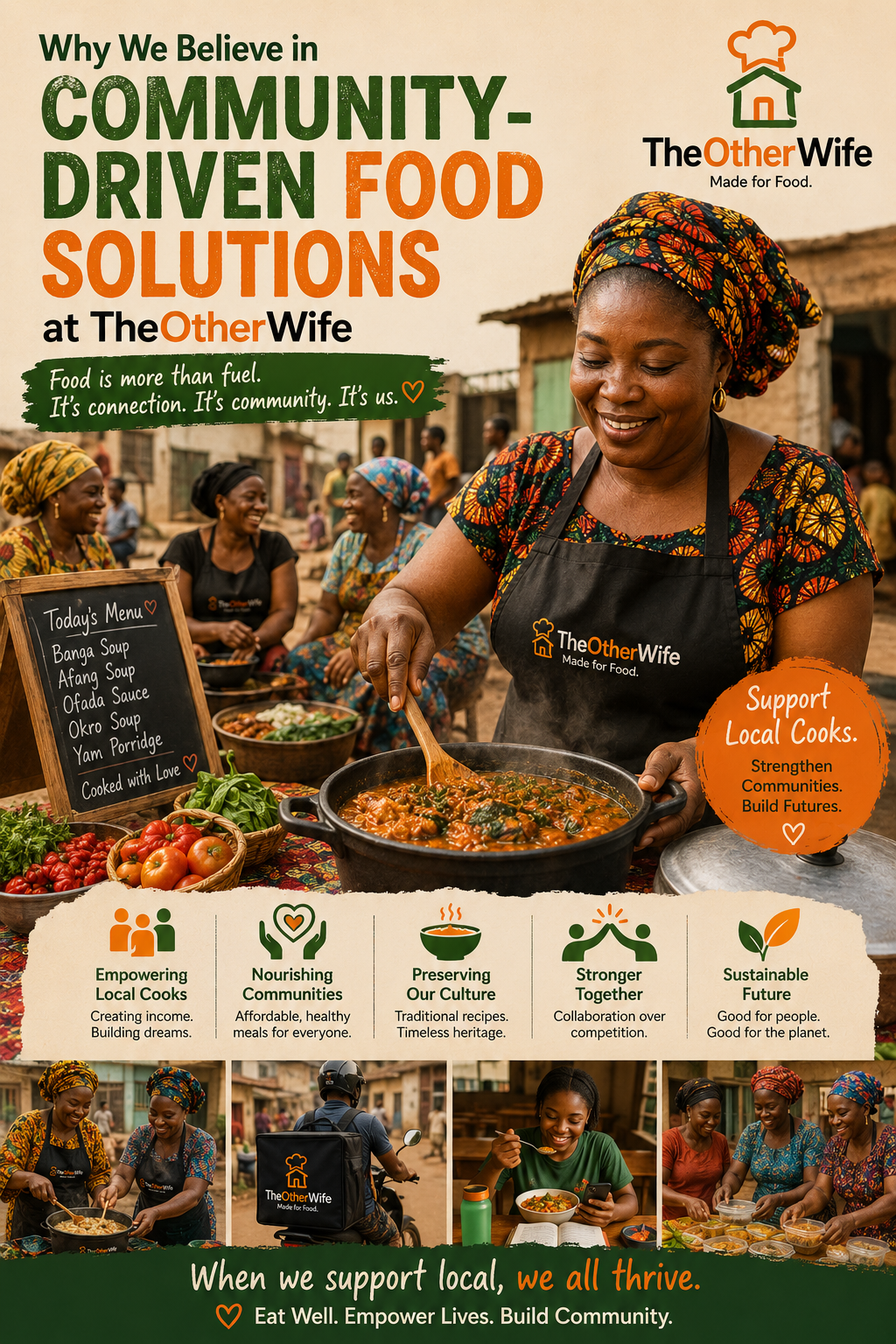
Community-driven food solutions build stronger local economies, preserve culture and create dignity through food.
In a world of fast food chains, international brands and tech-enabled convenience, something quietly powerful is happening at the grassroots: a return to local, community-driven food solutions.
At TheOtherWife, we believe food is not just fuel, it’s a way to connect, empower and uplift people. It’s about relationships, not just transactions.
That’s why we’ve built our platform on one foundational belief: the most sustainable, inclusive and culturally rich food systems start at home (with communities, not corporations).
This blog post dives into why community-driven food solutions matter, how they transform lives and why we’re betting on them to shape the future of food in Africa and beyond.
1. Food Is a Social Connector, Not Just a Service
Every culture has its own food rituals. In Nigeria, it’s the Sunday stew shared with extended family. It’s the neighborhood party where women gather to peel egusi together. It’s the street vendor whose puff-puff brings people from three streets away.
Food is deeply social. But modern food systems often strip food of this connection. Everything becomes mechanical: order, deliver, eat, repeat. What’s missing is the human story behind the plate.
At TheOtherWife, we bring that story back. Every meal on our platform is prepared by a real person (someone with a name, a kitchen, a recipe passed down through generations). When customers order, they aren’t just “buying food.” They’re supporting someone’s hustle, someone’s heritage and someone’s dream.
2. Communities Know Their Own Needs Best
What works in one city might fail in another. What sells in a restaurant might not reflect what people actually eat at home.
Community-driven solutions are different.
They start from the inside (from cooks and vendors who already understand):
- The tastes and spice levels of their people.
- The economic realities of their neighborhood.
- The dishes that bring people comfort, identity and healing.
That’s why many of our vendors start with simple, deeply local dishes: Banga soup, Afang, Ofada sauce, Okro, Yam porridge. No expensive ingredients. Just real food that real people want to eat.
These meals are not imported trends, they are community-tested traditions.
3. Empowering Vendors Builds Stronger Economies
In most African communities, food preparation is a gendered act and overwhelmingly done by women. But outside the household, these women are rarely recognized as part of the economy.
We believe they should be.
By helping home chefs turn their meals into marketable offerings, TheOtherWife helps to:
- Create income streams for women.
- Reduce financial dependency in households.
- Build micro-enterprises with potential for scaling.
When one woman starts selling her soup from home, she feeds more than just her customer. She feeds her children, pays school fees, contributes to rent and gains confidence in her abilities.
This ripple effect turns one pot of soup into community-wide impact.
4. Food Should Be Accessible and Affordable
Many food delivery apps cater to the top 5–10% of earners. Their meals are often expensive, foreign, or portioned in ways that don’t meet local expectations. But in communities across Nigeria and West Africa, people are looking for affordable, nutritious meals that reflect their culture and fill their bellies.
Community-driven platforms close this gap. Our vendors set their own prices. They cook with local ingredients. They know how to portion a N3,000 meal so that it actually satisfies.
Customers on TheOtherWife aren’t just getting access to food, they’re getting access to dignity. The dignity of a warm bowl of soup. The dignity of knowing that food doesn’t have to be a daily source of stress. The dignity of being able to choose from familiar, nourishing options that don’t break the bank.
5. Preserving Culture Through the Kitchen
Food is culture. It carries the stories of ancestors, the identity of tribes, the values of a people. But globalization is threatening that culture. Every day, fast food replaces fermented locust beans. Instant noodles replace pounded yam. Fusion dishes overshadow indigenous recipes.
Community cooks are the last keepers of culinary culture. That’s why we spotlight and support vendors who cook with tradition. The mother who still grinds her pepper by hand. The grandfather who uses native firewood to make pepper soup. The young cook re-learning how to ferment iru the way her grandmother did.
By giving these vendors a platform, we are preserving more than food, we are protecting heritage.
6. Home Kitchens Can Be Hubs of Innovation
Innovation doesn’t always look like food tech startups or fancy restaurant menus. Sometimes, it looks like a woman figuring out how to make bulk jollof on a two-burner stove. Or a vendor experimenting with ways to package afang soup for spill-free delivery. Or a team of neighbors pooling gas to fulfill large orders together.
Community cooks are incredibly innovative, because they have to be. At TheOtherWife, we recognize and reward this creativity. We see the home kitchen as a powerful site of grassroots innovation, a place where resilience, efficiency and imagination meet.
7. We’re Stronger When We Support Each Other
The traditional restaurant model can be competitive. Everyone wants to outcook, outdesign, outshine the next. But community-driven food platforms are different. They’re rooted in collaboration, not competition.
We’ve seen vendors share packaging tips, refer customers to each other and even collaborate on large orders. We’ve seen customers promote their favorite cooks without being asked. We’ve seen vendors teach others how to improve their hygiene, expand their menus or manage time better.
This is the power of community over competition. And in a country like Nigeria, where unemployment is high and cost of living is rising, this model matters more than ever. Because when we support one another, everyone eats.
8. It’s Sustainable for People and the Planet
Community food systems are often more sustainable than industrial ones:
- Less food waste (vendors cook what’s ordered).
- Lower carbon footprint (local sourcing, no international shipping).
- Better portion control (made-to-order meals).
- Minimal packaging (many vendors use eco-friendly options).
And because our platform operates digitally, we reduce the need for large infrastructure, just kitchens, phones and heart.
In a world facing climate change, food insecurity and supply chain breakdowns, community-based models offer a sustainable path forward.
9. We’re Not Just Building a Business, We’re Building a Movement
At TheOtherWife, we’re not just creating a delivery service. We’re creating a movement that re-centers food around people, not profits.
A movement that says:
- A cook in Ajegunle deserves as much visibility as a chef in VI.
- A student ordering afang on a budget deserves quality and flavor.
- A mother who feeds five families a week from her kitchen is an entrepreneur.
This movement is powered by ordinary people doing extraordinary things through food.
Final Thoughts: The Future Is Local
We believe in community-driven food solutions because they are:
- Authentic
- Empowering
- Affordable
- Sustainable
From the woman stirring okra soup in her home kitchen to the student ordering a bowl to make it through exam week, every player in this system matters.
If we want to build a food future that nourishes not just bodies but lives, we must look beyond big brands and return to something more grounded:
Ready to Join TheOtherWife?
Whether you’re a cook, a customer or a supporter of community-driven solutions, you’re welcome here. Explore the meals on TheOtherWife, sign up as a vendor or simply share this story.
Because in our world, food doesn’t just feed the body, it feeds hope, dignity and community.